A routine visit to a zoo turned into a frightening and unexpected moment when a woman lost her balance while standing on a metal railing beside a tiger enclosure. The incident, captured in a short video, has attracted attention because of the woman’s risky position and the presence of a powerful tiger just beyond the protective fencing.
What appeared to be an ordinary wildlife viewing experience quickly became a concerning situation. The footage highlights the importance of following zoo safety rules and respecting the barriers designed to protect both visitors and animals.
A Risky Position Near a Tiger Enclosure
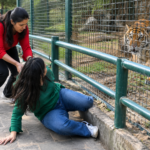
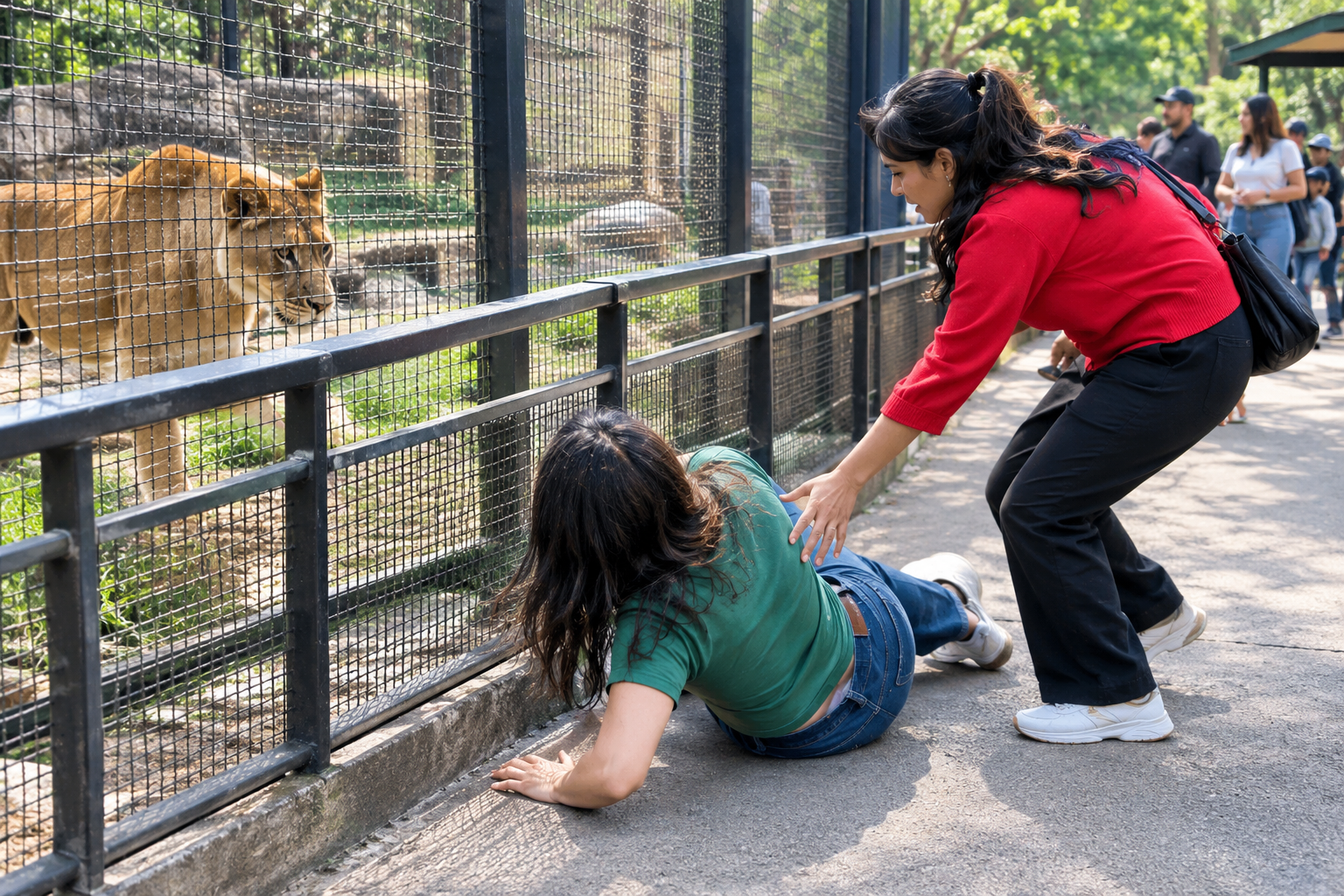
The video begins with a woman wearing a green top, blue jeans, and white shoes standing on a narrow metal railing beside a large animal enclosure. She appears to be leaning toward the fencing while a tiger moves around inside its habitat.
The tiger can be seen relatively close to the protective barrier. Its presence makes the situation particularly concerning because tigers are powerful wild animals that should always be observed from a safe distance.
Although the reason for the woman’s decision to stand on the railing is not established by the footage, her position appears unnecessarily risky.
Zoo railings are designed to establish a safe boundary between visitors and animal enclosures. Climbing or standing on these structures can create dangerous situations, even when the animal remains behind a secure fence.
The Unexpected Fall
As the footage continues, the woman suddenly loses her balance and falls from the elevated metal railing toward the narrow ground-level area beside the enclosure.
The unexpected movement changes the entire atmosphere of the scene. What began as a wildlife viewing moment becomes a frightening incident that immediately draws attention.
The camera captures the woman on the ground near the enclosure while the tiger remains visible on the other side of the fencing.
The short recording does not establish whether she suffered an injury or what happened immediately afterward. Nevertheless, the situation raises important questions about visitor safety and the risks of ignoring protective barriers.
A moment of carelessness around a wildlife enclosure can have serious consequences. This is particularly true when visitors are positioned close to large predators.
The Tiger Remains Close to the Scene
One of the most attention-grabbing aspects of the footage is the tiger’s proximity to the woman.
The animal appears to remain within its enclosure as the incident unfolds. Its movements attract attention because viewers can see how close the wildlife habitat is to the visitor area.
Tigers are naturally powerful predators with impressive strength, speed, and hunting abilities. Even when they appear calm, they should never be treated like domestic animals.
Their behavior can change depending on their surroundings, instincts, and environmental conditions.
This is why professional zoos use protective fencing and controlled viewing areas. These safety measures allow people to observe fascinating animals without entering their space.
Why Climbing Zoo Barriers Is Dangerous
Many visitors enjoy taking photographs and recording videos when they see unusual animals. However, excitement can sometimes cause people to forget basic safety precautions.
Standing on railings, climbing fences, or leaning too far into an enclosure area can create unnecessary risks.
Protective barriers are carefully designed to separate visitors from potentially dangerous wildlife. They should never be used as climbing structures or platforms for better photographs.
Even if an animal is resting or appears uninterested in visitors, it is important to maintain a safe distance.
The incident involving the woman demonstrates why these rules should be taken seriously.
Understanding Tiger Behavior
Tigers are among the most recognizable wild animals in the world. Their distinctive orange coats, dark stripes, and powerful bodies make them popular attractions at zoos and wildlife parks.
However, their impressive appearance should remind visitors that they are wild predators.
In their natural habitats, tigers depend on their physical abilities and instincts to survive. They are generally solitary animals and require considerable space to move, explore, and rest.
Captive environments must provide appropriate care, enrichment, and protection for these animals.
Visitors should observe them quietly and avoid actions that could disturb their environment.
Attempting to get closer to a tiger for a photograph or video is never worth the risk.
The Importance of Zoo Safety Rules
Zoos establish visitor guidelines to prevent accidents and protect wildlife. These rules are not simply suggestions; they are important safety requirements.
Visitors should remain behind designated barriers, follow warning signs, and listen to instructions from zoo employees.
Children should always be supervised, particularly near large animal enclosures.
People should also avoid shouting, throwing objects, feeding animals without permission, or attempting to attract their attention through dangerous behavior.
If someone falls or becomes trapped near an enclosure, nearby visitors should immediately alert trained zoo personnel rather than attempting a dangerous rescue.
Professional staff understand the facility’s safety procedures and can respond appropriately.
A Reminder for Families and Wildlife Enthusiasts
For many families, visiting a zoo is an enjoyable educational experience. Children get the opportunity to see animals they have previously encountered only in books, documentaries, or photographs.
These experiences can help develop an appreciation for nature and wildlife conservation.
However, every visitor has a responsibility to behave safely.
Parents should explain why fences and railings must be respected. Adults should also set a positive example by following the same instructions.
Taking photographs should never become more important than personal safety.
Responsible wildlife tourism means enjoying animals without disturbing them or putting people at unnecessary risk.
Why the Video Is Attracting Attention
Short videos showing unexpected incidents often generate discussions across social media platforms. This particular footage has several elements that immediately capture viewers’ attention: a woman standing on a narrow railing, a tiger nearby, and an unexpected fall.
The combination creates a dramatic scene that reminds viewers how quickly an ordinary outing can become concerning.
Many viewers may also question why anyone would take such a risk near a dangerous animal enclosure.
However, the complete circumstances surrounding the incident remain unknown. The short recording does not provide enough information to establish the woman’s intentions, the cause of the fall, or her condition afterward.
It is therefore important to avoid making unsupported claims.
Final Thoughts
The unexpected zoo incident offers an important lesson about personal responsibility and wildlife safety.
Tigers are fascinating animals, and observing them can be an unforgettable experience. However, visitors must understand that these creatures are wild predators and deserve respect.
Protective barriers, warning signs, and visitor restrictions exist to prevent unnecessary accidents.
The woman’s fall near the tiger enclosure serves as a reminder that even a brief moment of risky behavior can create a potentially serious situation.
Ultimately, the best way to enjoy wildlife is to observe animals responsibly, remain within designated visitor areas, and follow all safety instructions.
A memorable zoo visit should be built around education, conservation, and respect for nature—not unnecessary risks.