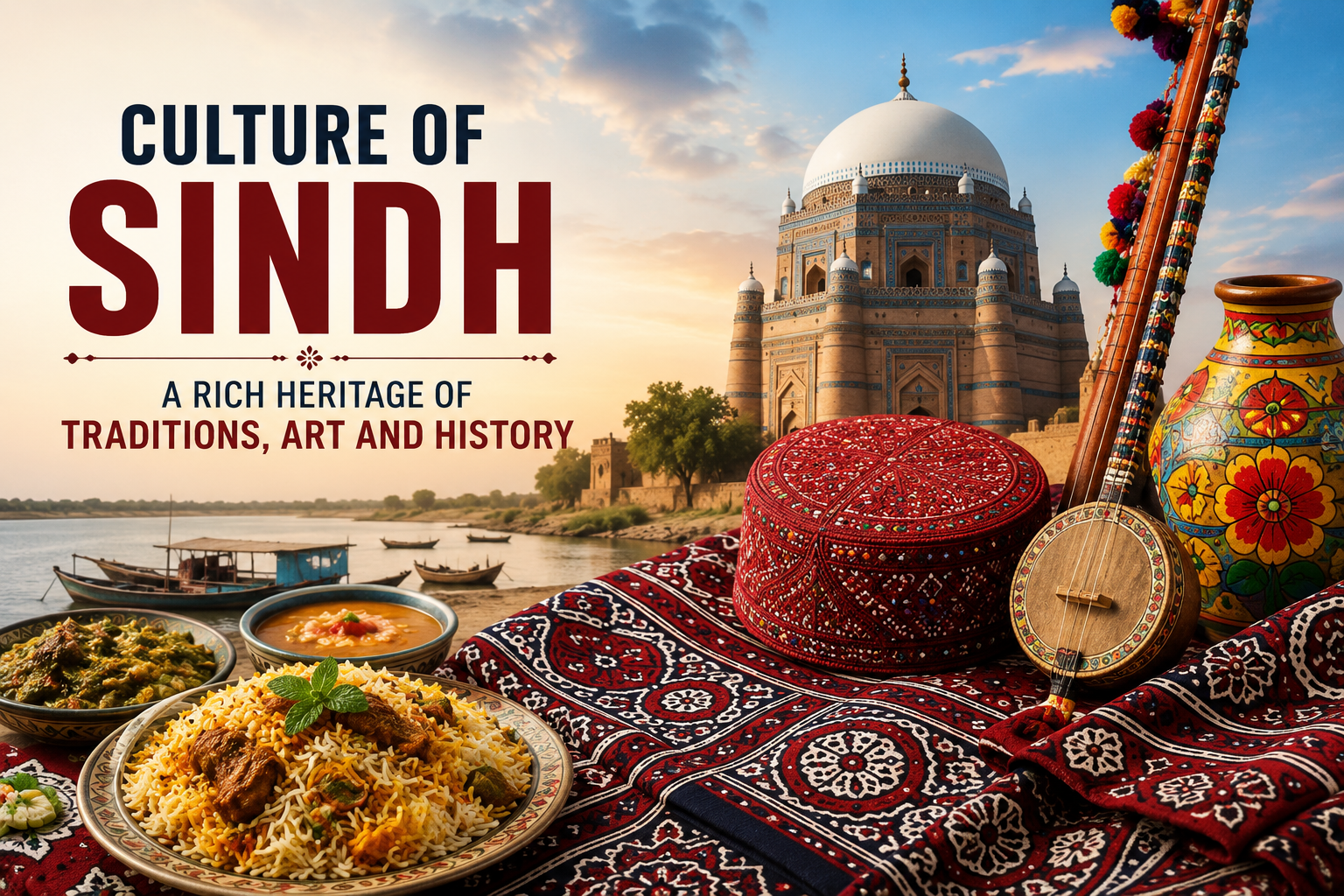
The culture of Sindh is one of the oldest and most fascinating cultural traditions in South Asia. Located in southeastern Pakistan, Sindh is known for its rich history, colorful traditions, traditional clothing, music, handicrafts, food, and warm hospitality. The cultural heritage of Sindh has developed over centuries and continues to influence the identity of the Sindhi people today.
A Glimpse into Sindhi History
Sindh has a remarkable historical background that dates back thousands of years. The region was home to the ancient Indus Valley Civilization, one of the world’s earliest urban civilizations. The archaeological site of Mohenjo-daro provides an important connection to this ancient history and demonstrates the advanced urban culture that existed in the region thousands of years ago.
Over the centuries, Sindh became a meeting place for different cultures, languages, religions, and civilizations. This long history has contributed to the diverse and distinctive identity of Sindh.
Sindhi Ajrak and Sindhi Topi
When people think about Sindhi culture, two traditional symbols often come to mind: Ajrak and Sindhi Topi.
Ajrak is a traditional block-printed textile featuring beautiful geometric patterns, commonly associated with deep red, blue, black, and white colors. It is widely worn and presented during cultural events and celebrations.
The Sindhi Topi is another important symbol of Sindhi identity. It is a traditional embroidered cap that is often worn with cultural clothing. Together, Ajrak and Sindhi Topi represent pride in Sindhi heritage and traditions.
Sindhi Language and Literature
The Sindhi language plays an important role in preserving the cultural identity of Sindh. It has a rich literary tradition that includes poetry, stories, folk tales, and historical writings.
One of the most celebrated figures in Sindhi literature is Shah Abdul Latif Bhittai, whose poetry remains deeply respected throughout Sindh. His famous collection, Shah Jo Risalo, reflects themes of love, spirituality, humanity, courage, and the relationship between people and their homeland.
Traditional Music and Folk Culture
Music is another important part of Sindhi heritage. Traditional Sindhi music includes distinctive melodies and instruments that have been passed down through generations.
Folk traditions, poetry, and music are commonly performed at cultural gatherings, weddings, festivals, and other celebrations. These traditions help preserve the stories and values of previous generations.
Sindhi Food and Hospitality
Sindhi cuisine is known for its distinctive flavors and variety. Traditional dishes include Sindhi Biryani, Sai Bhaji, Sindhi Kadhi, Seyal Mani, and various fish and meat dishes.
Hospitality is also an important part of Sindhi culture. Guests are traditionally welcomed with respect and offered food and refreshments as a sign of generosity.
Sindh Culture Today
Modern Sindh continues to combine its ancient heritage with contemporary life. Cities such as Karachi, Hyderabad, Sukkur, and Larkana have become centers of education, business, arts, and technology while maintaining strong connections with Sindhi traditions.
Cultural festivals, traditional clothing, music, literature, handicrafts, and local languages continue to play an important role in keeping Sindhi culture alive.
Conclusion
The culture of Sindh represents a unique combination of ancient history, traditions, art, literature, music, food, and hospitality. From the legacy of the Indus Valley Civilization to the colorful Ajrak and Sindhi Topi, Sindh has a cultural identity that remains deeply connected to its history.
Preserving these traditions and introducing them to younger generations can help ensure that the rich Sindhi heritage continues to flourish for many years to come.