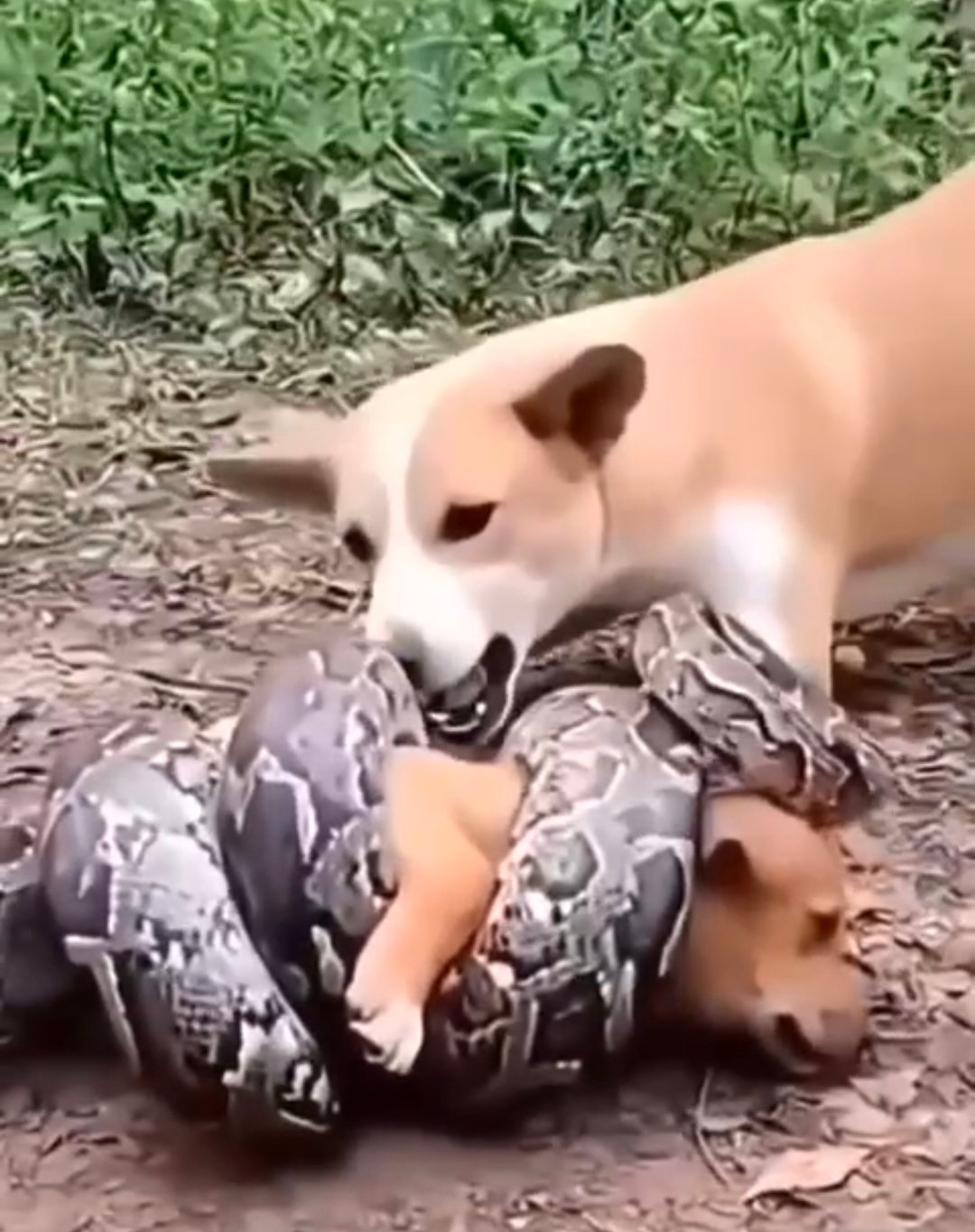
An ordinary day can change in an instant when an unexpected encounter with wildlife occurs. In a dramatic scene described as a confrontation between several dogs and a giant python, the animals find themselves facing an unusual and potentially dangerous situation. The dogs appear determined to stay close to their owner, creating a tense moment that highlights their protective instincts and the unpredictable nature of encounters with wild animals.
Large snakes can be frightening to encounter, especially when their size and movements are unfamiliar. Pythons are powerful constrictors that rely on their strength and ability to capture prey. Although these snakes generally prefer to avoid people, they may become defensive when startled, approached too closely, or unable to escape.
When a large python appears near a home or in an area where people and pets gather, the situation can quickly become concerning. In such circumstances, the presence of several dogs may add to the commotion, particularly if they begin barking, approaching the snake, or attempting to keep it away from their owner.
Dogs React to the Giant Python
Dogs are known for their alertness and ability to react quickly to unfamiliar sights, sounds, and smells. When confronted with a large snake, their responses can vary significantly. Some dogs may bark continuously, while others might retreat, watch cautiously, or attempt to approach the animal.
In the encounter described by the video’s title, several dogs reportedly confront a giant python in an apparent effort to protect their owner. Their reaction creates a dramatic situation in which curiosity, fear, and protective behavior may all play a role.
Dogs often form strong attachments to their owners. They learn familiar routines, recognize voices, and respond to changes in the behavior of the people around them. When something unusual happens, some dogs may position themselves close to their owners or react defensively toward what they perceive as a threat.
However, it is important to understand that dogs do not necessarily recognize the full danger posed by a large snake. Their barking and movements may be driven by instinct, excitement, territorial behavior, or uncertainty rather than a deliberate understanding of the situation.
Regardless of their motivation, a group of dogs confronting a powerful wild animal can create a potentially hazardous encounter for everyone nearby.
Why a Giant Python Can Be Dangerous
Pythons are among the world’s most impressive snakes. Depending on the species, some can grow several meters long and develop considerable strength. They are nonvenomous, meaning they do not inject venom through a bite, but their powerful bodies can make close contact dangerous.
Pythons typically hunt by ambushing prey and using constriction. They may also bite when threatened or handled. Even a snake that appears calm can react suddenly if it feels cornered.
The risk becomes more complicated when dogs surround or repeatedly approach the animal. A snake may attempt to defend itself, while excited dogs may continue barking or moving closer. This can increase the likelihood of bites and injuries.
For this reason, wildlife experts generally recommend keeping people and pets at a safe distance from large snakes. Attempting to capture, provoke, or kill a python without appropriate training can put both humans and animals at risk.
The Powerful Bond Between Dogs and Their Owners
One of the most compelling aspects of stories involving dogs and their owners is the close relationship that can develop between them.
For many families, dogs are more than household pets. They are companions that share daily routines, provide comfort, and become familiar members of the household. Over time, they may learn to recognize situations that cause their owners distress and respond with increased attention or activity.
Protective behavior can take different forms. A dog may bark when an unfamiliar person approaches, remain close to a family member in an unfamiliar environment, or react strongly when it senses something unusual.
Such behavior is often interpreted as bravery or loyalty. Although these qualities make dogs remarkable companions, their instinctive reactions can sometimes expose them to danger.
In an encounter with a giant python, even the most courageous dog may be vulnerable. A large snake is a wild animal with its own survival instincts, and a confrontation can escalate without warning.
The safest outcome is therefore not necessarily one in which the dogs chase the snake away, but one in which both the pets and the wild animal can move away without injury.
What Should People Do During a Snake Encounter?
A sudden encounter with a large snake can cause panic, particularly when pets are nearby. However, remaining calm and avoiding unnecessary movement toward the animal can help reduce the risk.
People should follow several important precautions when a python appears nearby.
First, keep a safe distance. Do not attempt to touch, corner, or chase the snake. Even if it appears motionless, it may react quickly when approached.
Second, call the dogs away if it is safe to do so. Owners should avoid stepping toward the snake to retrieve a pet. If possible, use a familiar recall command from a safe distance and move the dogs away from the area.
Third, contact trained wildlife rescuers or local animal-control professionals who can assess the situation and handle the snake appropriately.
Finally, keep children and other pets away until the area has been declared safe. If anyone or any animal is bitten or injured, seek appropriate medical or veterinary assistance immediately.
These precautions are especially important in areas where pythons and other large snakes live close to residential communities.
Wildlife Encounters Remind Us to Respect Nature
Encounters between domestic animals and wildlife often attract public attention because they bring together two very different worlds. Dogs are accustomed to living alongside people, while pythons are wild predators adapted to surviving in natural environments.
When their paths cross, the outcome can be unpredictable. Human development, changes in habitat, and the availability of food can sometimes bring wild animals closer to homes, farms, and roads.
Understanding wildlife behavior can help people respond more responsibly. Pythons do not usually seek out confrontations with humans, and many encounters end when the snake is given enough space to move away.
Rather than treating such animals as villains, people can recognize their role in the ecosystem. Pythons help regulate populations of rodents and other animals, contributing to the balance of their natural habitats.
At the same time, protecting domestic pets remains an important responsibility for owners who live in areas where large snakes may be present.
A Dramatic Moment That Highlights Loyalty and Caution
The story of several dogs confronting a giant python to protect their owner presents a striking image of loyalty, instinct, and the unpredictability of nature. The idea of dogs standing their ground when faced with a large wild animal is naturally compelling, particularly for people who have experienced the close companionship of a beloved pet.
However, without independently verified details of the specific incident, it is not possible to establish exactly what happened, why the dogs reacted as they did, or how the encounter ended.
What the scenario clearly illustrates is the importance of understanding animal behavior and responding carefully when domestic pets encounter dangerous wildlife.
Dogs may be courageous and protective, but they also depend on their owners to keep them safe. The most responsible response to a confrontation involving a giant python is to create distance, avoid provoking the snake, and seek professional help when necessary.
Ultimately, encounters like this remind us that the bond between humans and dogs is special, but nature demands respect. True protection means ensuring that both loyal companions and wild animals have the opportunity to leave a dangerous situation safely.